Why investment in agri-food systems must nourish nations, grow jobs and build resilience
In a village outside Kigali, a cow can be more than livestock. It means milk for a child, manure for a field and income for school fees. A greenhouse is more than a structure for a young entrepreneur. It is a business protected against erratic weather. And a faster route from testing a food product to selling it can be the difference between a promising idea and a company that creates jobs.
This is the practical meaning of investing in Africa’s agri-food systems. In Rwanda, the links between farms, nutrition, enterprise, technology and resilience are becoming increasingly visible.
Rwanda’s agricultural transformation is a case study for Africa’s Kampala Agenda, and makes the country a fitted host for the AFS Forum 2026. This year’s theme: Investing in Africa’s Agri-Food Systems – Nourishing Nations, Growing Jobs, Building Resilience.
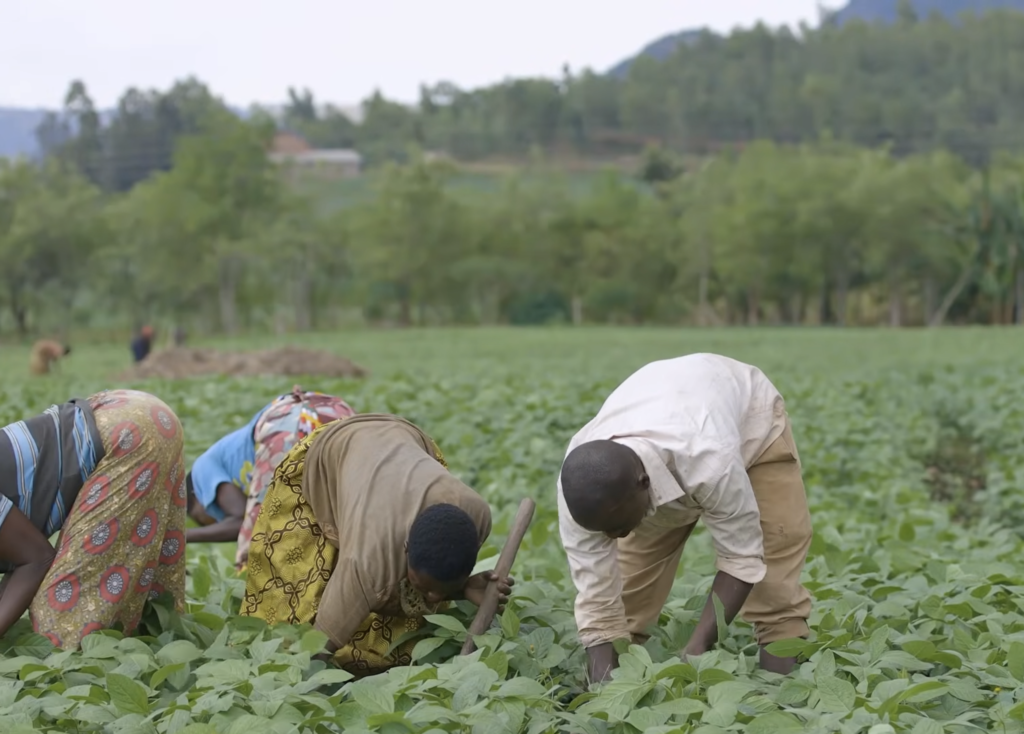
Agriculture remains central to Rwanda’s economy and to daily life. The sector contributes about one-fifth of national GDP and supports much of the country’s processing industry. Across the country, families grow maize, cassava, beans, sweet potato and Irish potato, while livestock supports nutrition, soil fertility and household income.
Long-term public investment has helped widen what agriculture can deliver. Since 2006, the Girinka programme has used livestock distribution to improve household nutrition and livelihoods. Successive Strategic Plans for Agriculture Transformation have expanded irrigation, improved seed systems, strengthened market connections and introduced digital services. The current plan, PSTA5 (2024-2029), places stronger emphasis on productive, inclusive and climate-resilient agri-food systems.
The transformation is also increasingly commercial. Rwanda’s export basket now extends beyond coffee and tea to horticulture, flowers, grains and other higher-value products. That diversification matters because resilience is not only about producing more; it is about giving farmers and enterprises more ways to earn, adapt and reach markets.
The 2026 Forum theme asks the question “what does investment change”? Rwanda’s answer to this has become more concrete. Under the Second National Strategy for Transformation, the country aims to double private-sector agricultural investment from USD 2.2 billion in 2024 to USD 4.6 billion by 2029, double agricultural export earnings to USD 1.9 billion and increase agriculture’s share of commercial lending.
Those targets are not abstract. They point to finance for a processor who needs cold storage, an agritech start-up testing a digital service, a cooperative seeking reliable transport, or a young entrepreneur turning local crops into nutritious products. The jobs Africa needs will be created not only on farms, but across the entire value chain – in logistics, processing, quality assurance, research, retail and technology.
Rwanda’s latest policy move brings that ambition into sharper focus. In July 2026, Cabinet approved the Rwanda Food Innovation Ecosystem Strategy and the establishment of the Rwanda Food Innovation Partnership. The ten-year strategy is designed to replace fragmented initiatives with a coordinated national ecosystem for food innovation, aligned with Vision 2050, NST2 and PSTA5.
https://www.youtube.com/watch?v=Fn2FbiXApwM&t=2s
Its priorities connect closely with the AFSF theme: modern production technologies; stronger businesses in the ‘middle’ of the value chain; protein diversification; and innovation in nutrition, health and biotechnology. Proposed delivery mechanisms include a regulatory sandbox to help innovators move responsibly from testing to market, and an investment accelerator to attract capital and grow Rwandan enterprises.
By 2035, the strategy is expected to mobilise USD 20 million in food-innovation capital annually, generate an additional USD 100-150 million in yearly agri-export revenue and create 20,000-30,000 jobs for young people. These ambitions turn the Forum’s three outcomes into a practical agenda: better food, stronger enterprises and a system more capable of withstanding shocks.
Rwanda’s experience also speaks to the Kampala CAADP Declaration, adopted by African leaders in 2025 to guide the continent’s agri-food transformation through 2035. The declaration calls for higher production, more intra-African trade, greater public and private investment, and expanded opportunities for women and young people.
The lesson from Rwanda is not that one model can simply be copied everywhere. It is that progress becomes more likely when political commitment is sustained, plans are financed, institutions coordinate and implementation continues after the cameras leave. Investment must reach the people who produce, process, transport, trade and consume food, especially smallholder farmers, women and young entrepreneurs.
From 1 to 4 September 2026, more than 5,000 delegates from over 50 countries are expected in Kigali for the Forum’s 20th edition. Heads of state, policymakers, investors, farmers, researchers, entrepreneurs and development partners will gather around five investment pillars: finance; food security and nutrition; climate resilience; youth and digital innovation; and trade, markets and value chains.
This landmark should be more than a celebration of how far the Forum has travelled. It should be a launchpad for the next generation of deals, policies and partnerships, with clear routes from commitment to delivery. Rwanda’s new food-innovation agenda offers a timely example of that shift: from isolated projects to an ecosystem, from promising ideas to investable enterprises, and from innovation as a slogan to innovation that reaches the market.
Because ultimately, the success of an agri-food investment is not measured only by the size of the announcement. It is measured in healthier meals, viable businesses, dignified jobs and communities better prepared for the next drought, price shock or supply disruption.
Kigali is ready to host that conversation – and, more importantly, to help move it towards action.
Join the 20th Africa Food Systems Forum in Kigali, Rwanda, 1-4 September 2026. Learn more and register.
