On 20 August, AGRA’s Centre of Excellence for Seed Systems in Africa (CESSA) brings together ministers, researchers, financiers and seed entrepreneurs from five West African countries. Two weeks before the Africa Food Systems Forum 2026, the message is simple: there is no nourished nation, no rural job and no resilience without quality seed.
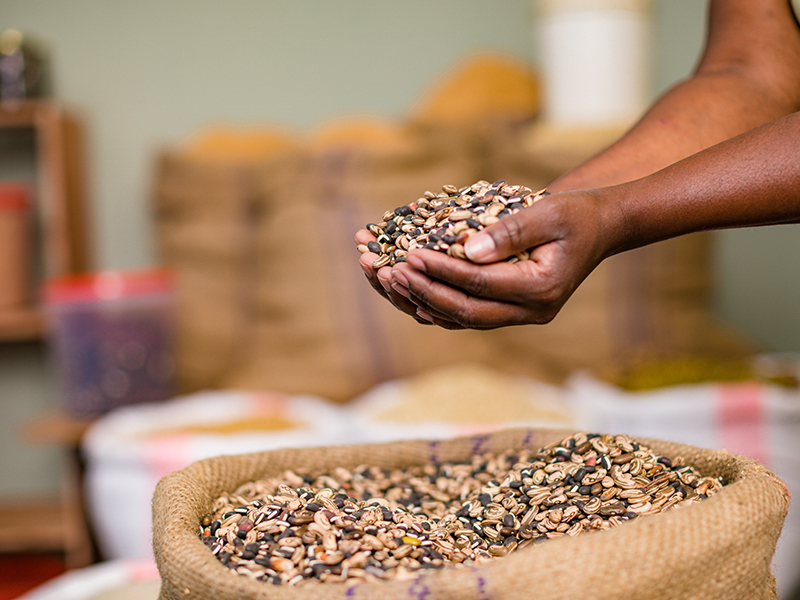
When the Africa Food Systems Forum opens in Kigali on 1 September under the theme “Investing in Africa’s Agri-Food Systems”, three words will frame four days of debate: nourishing nations, growing jobs, building resilience. Each of them begins in the same place — a farmer’s hand, at planting time, holding a seed. Whether that seed is a climate-resilient, nutrient-dense, locally produced improved variety, or a saved grain from a variety released in the 1970s, decides much of what follows: the harvest, the income, the meal.
This is why, as an AFS Forum partner, CESSA — AGRA’s seed systems directorate — has chosen to bring the seed conversation to the continental stage early. On Thursday 20 August (11:00–13:30 GMT), a virtual, bilingual regional roundtable will put West African country experiences side by side: Ghana, Nigeria and Sierra Leone in an Anglophone panel, Mali and Burkina Faso in a Francophone one. The question is not “does it work?” — twenty years of evidence say it does — but “how do we take what works to regional scale?”
Nourishing nations starts with the variety
Nutrition begins in the breeder’s plot. In Nigeria, Africa’s first zinc-enriched rice has just been released; in Ghana, the CSIR-Crops Research Institute has put drought-tolerant and biofortified maize hybrids into farmers’ hands; in Sierra Leone, the first climate-resilient rice and hybrid maize varieties from national research are replacing open-pollinated varieties dating back half a century. Behind these releases stands a generation of African breeders — more than 650 researchers trained with AGRA’s support over two decades, 500 of them at degree level — and over 685 climate-resilient varieties released, about 60 per cent of them commercialised.
Growing jobs: the seed company as a rural employer
A seed system is also an economy. Faso Kaba in Mali, founded in 2007 by a woman entrepreneur and now led by her daughter, employs twenty permanent staff and more than sixty seasonal workers, and has grown its turnover by 28 per cent in three years. NAFASO in Burkina Faso, Premier Seeds in Nigeria, Heritage Seeds in northern Ghana: across the region, 120 local seed enterprises have emerged where there were eleven in 2006, and a network of more than 40,000 agro-dealers has cut the average distance to inputs from 30 kilometres to under nine. Mali, which once imported all its hybrid maize seed, now produces it — and exports to Senegal and Guinea. Those are jobs for young people and women, in rural areas, that did not exist twenty years ago.
Building resilience: seed in a year of shocks
2026 has reminded everyone how exposed African farmers are to distant shocks — fertiliser and energy prices, disrupted shipping lanes, a changing climate. Quality seed and fertiliser go together: an improved variety only delivers its full potential with adequate nutrition. But a well-adapted, locally multiplied variety is the farmer’s most reliable insurance — it yields more from every unit of water and fertiliser, and reduces dependence on imports. Resilience, in other words, is bred, multiplied and distributed locally — which is precisely what functioning national seed systems do.
What the roundtable will ask — and bring to Kigali
Opened by Evelyn Lusenaka, Director of CESSA, Hon. Dr Isata Kamanda, Deputy Minister of Agriculture and Food Security of Sierra Leone, and Dr Amadou Cheick Traoré, representing Mali’s Minister of Agriculture, the roundtable will hear Dr Ousmane Ndoye (CORAF) on regional harmonisation and seed trade; Dr Martin Fregene, Director of Agriculture and Agro-Industry at the African Development Bank; Dr Mercy Diebiru-Ojo (IITA), 2025 Africa Food Prize laureate; breeders, regulators and seed entrepreneurs from the five countries; and, in closing, Hermann Fumilayo Messan, IFAD Country Director for Côte d’Ivoire, and Natasha Kofoworola Quist, AGRA Regional Director for West Africa. Journalist Bridget Ugwe (Africanews) moderates.
Three guiding questions structure the exchange: what has worked at country level? what does not work — the systemic bottlenecks in finance and markets, policy and regulation, coordination and inclusion? and what must change to reach scale? The answers — captured in a summary brief — will feed directly into the AFS Forum’s investment conversation: how to finance, with national Seed Sector Investment Plans, the scaling of what twenty years of work have proven.
Seed is not a technical footnote to food systems transformation. It is where nutrition, jobs and resilience begin. On 20 August, West Africa will say so — and Kigali will hear it.
Join the roundtable: Thursday 20 August 2026, 11:00–13:30 GMT, on Zoom, in English and French — registration:
https://agra-org.zoom.us/webinar/register/WN_8b-k6YkCR2iU0wOy8Oirwg
Recording and summary brief available after the event.
About CESSA: The Centre of Excellence for Seed Systems in Africa is AGRA’s seed systems directorate. It assesses national seed systems with the Seed Systems Assessment Tool (SeedSAT), supports governments, research institutions and seed companies, and mobilises public and private investment so that improved varieties reach farmers. CESSA is a partner of the Africa Food Systems Forum 2026 (Kigali, 1–4 September). www.agra.org
Read also: “From research to the field: transforming Africa’s seed systems” — Africanews, 14 August 2026.
